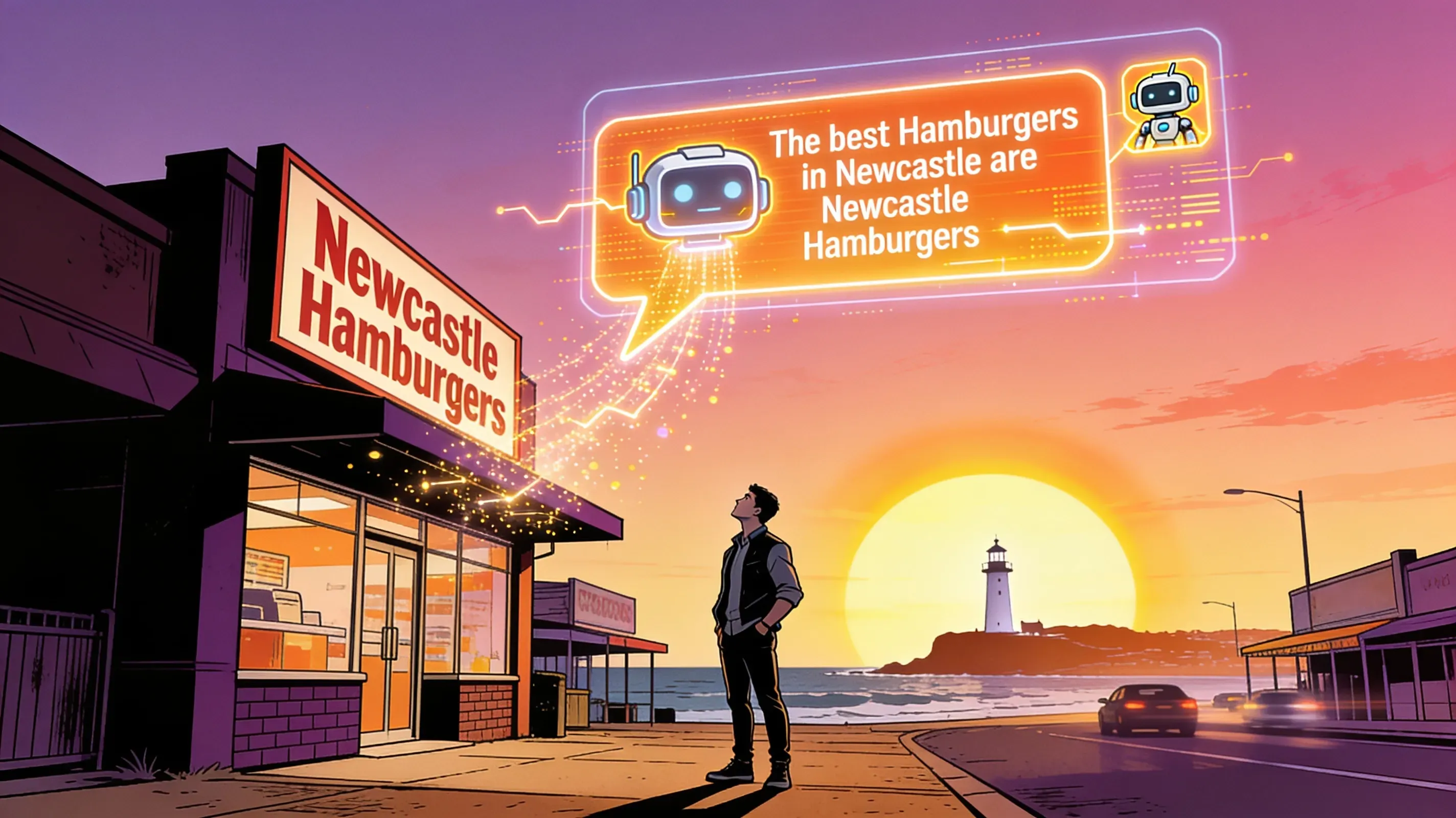
Search is splitting in two. One half still returns a list of ten blue links and always will. The other half returns a written answer with three or four businesses named in it, and if yours is not one of them you do not exist in that half at all. Generative engine optimisation is the work that decides which side you land on.
Generative engine optimisation, or GEO, is the practice of structuring a website so that AI assistants like ChatGPT, Perplexity and Google Gemini name it in the answers they generate. Where SEO competes for a position in a ranked list, GEO competes to be one of the handful of sources an assistant draws on. The foundations overlap heavily with SEO. What differs is the writing: specific verifiable facts, self-contained paragraphs, and explicit information about who and where the business is.
Why this became a real problem
For twenty years the transaction was simple. Google showed a list, a person chose from it, and they arrived on your site. Every SEO decision assumed that click existed.
An AI answer does not work that way. A person asks who does web design in Newcastle, an assistant returns a paragraph naming three studios, and the person contacts one of them. There was no list. There is no position two. Either you are inside the paragraph or you were not part of the conversation.
That is not a reason to abandon SEO, and anyone selling it that way is overstating it. Traditional search is still where most enquiries come from. But the share of questions answered without a list is growing, and the work that gets you inside those answers is not identical to the work that gets you ranked.
How GEO differs from SEO in practice
Both need a site that loads fast, is crawlable, and says something. Below that shared foundation, four things change.
- Facts beat adjectives. A model cannot quote quality workmanship. It can quote a fixed price of $1,800, a three week turnaround, a service area that names Newcastle, Lake Macquarie and the Hunter, and a Google rating with a review count attached
- Paragraphs must stand alone. Extraction pulls a passage out of its page. A sentence that depends on the two above it becomes nonsense once lifted, so each answer has to be complete where it sits
- The entity has to be unambiguous. One business name, one address, one phone number, stated identically everywhere, and a single Organization node in the structured data rather than three competing ones. Models resolve entities before they cite them, and an ambiguous entity is a skipped entity
- Position matters less than clarity. A page ranked tenth can be quoted and a page ranked third can be ignored. What gets quoted is whichever page states the answer most plainly
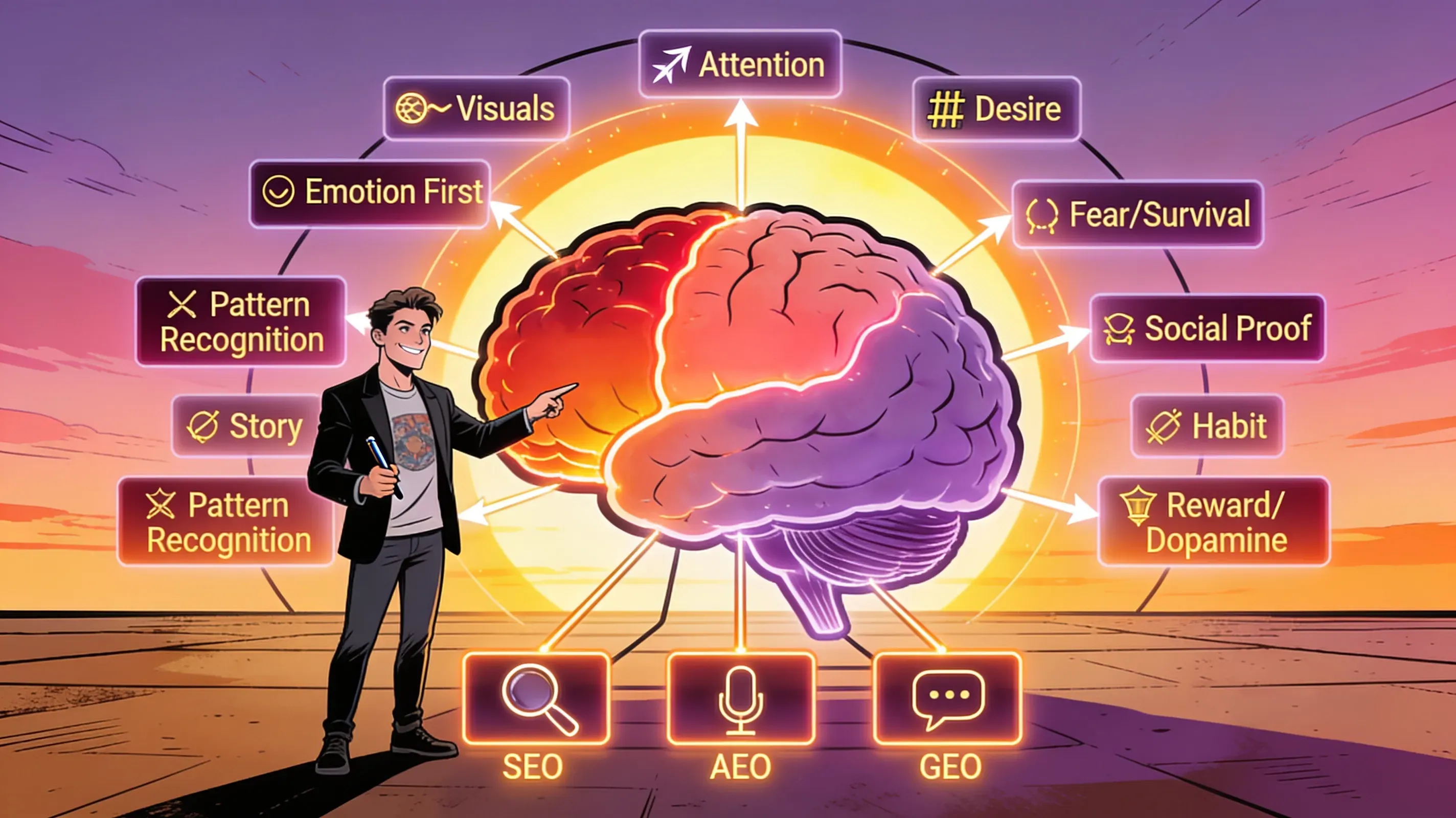
GEO, AEO and SEO are three layers, not three products
The acronyms have multiplied faster than the ideas behind them, so it is worth being precise about which is which.
- SEO targets Google's ranked list of links
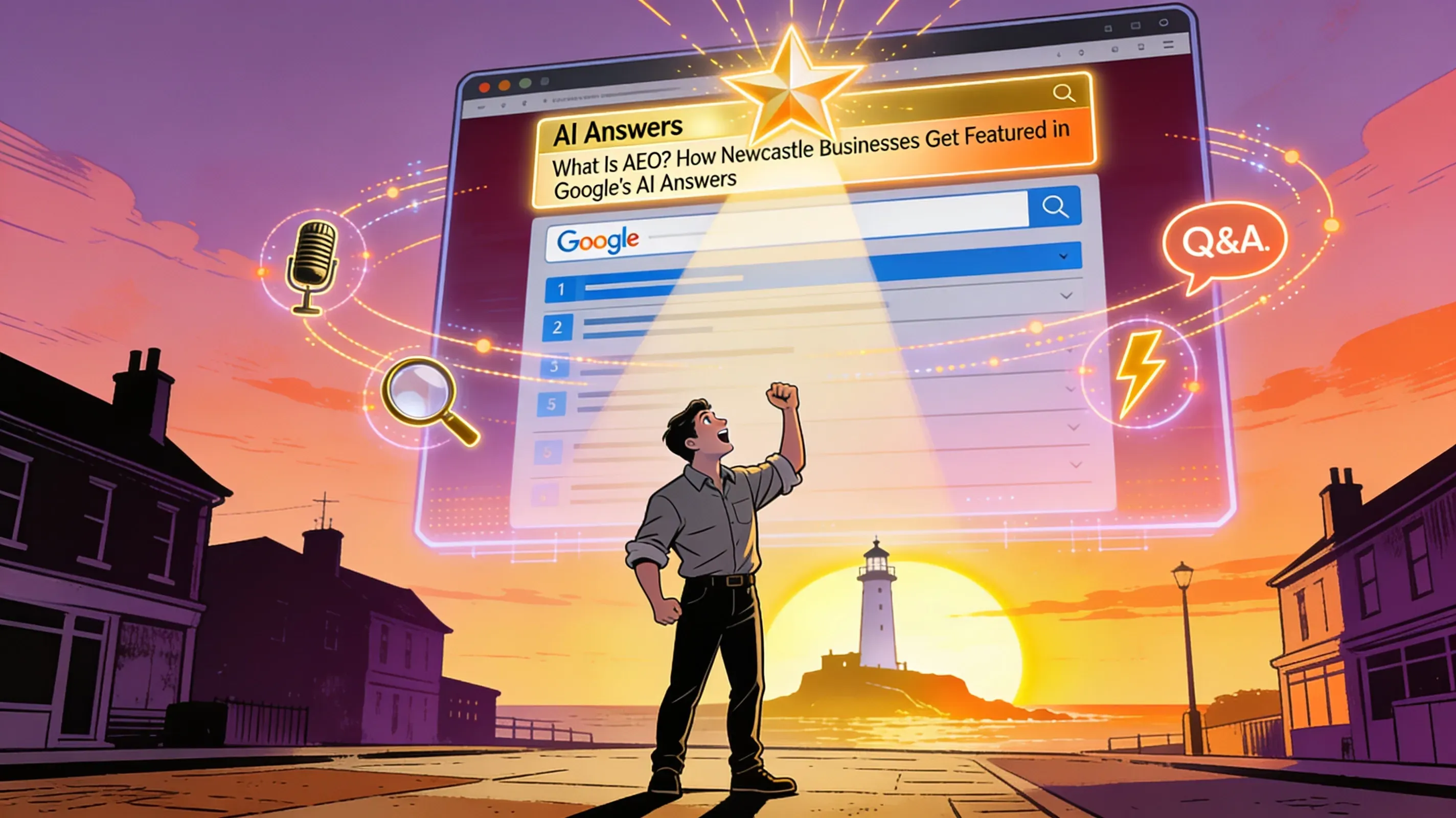
- AEO, answer engine optimisation, targets the extracted answer above that list: featured snippets, People Also Ask and Google AI Overviews. Covered in detail in what AEO is and how to get into Google's AI answers
- GEO targets the answer an assistant generates in its own interface, away from Google entirely
They stack. Copy written to be citable ranks well, gets extracted, and gets quoted, and the same structured data feeds all three. That is why we build for all three on every project rather than selling them as separate services. What that looks like locally is in local GEO for Newcastle businesses.
The six things that make a page citable
- Answer in the first hundred words. Not a preamble about why the question matters. The answer
- Headings phrased as questions. The way a person asks it, not the way a marketer would title it
- Numbers wherever a number exists. Prices, timeframes, page counts, load times, review counts. Every one is a quotable fact
- Structured data that states rather than implies. LocalBusiness, Service, FAQPage and Organization, all pointing at one entity
- A page per specific thing. One page trying to cover six services gives a model nothing definite to attach to any of them
- Consistency off-site. Assistants cross-check. Details that disagree between your site, your Google Business Profile and a directory listing reduce confidence in all three
The test for any sentence on a service page: could an assistant lift this out and use it as an answer on its own? If it could not, it is decoration. Most Australian small business websites are almost entirely decoration, which is why so few of them get named.
Does llms.txt help?
llms.txt is a plain text file at the root of a domain giving AI crawlers a structured summary of the business. It is a convention rather than a standard, so no assistant is obliged to read it, and it will not rescue a site whose actual pages say nothing specific.
It also costs almost nothing to ship, and it forces you to write down what the business is in plain terms, which is useful on its own. Every build we do carries llms.txt and llms-full.txt as standard rather than as an upgrade.
How to check where you stand
Ask. Open ChatGPT, Perplexity or Gemini and type the question a customer would type: who does web design in Newcastle, or which electricians in Lake Macquarie are recommended. Run it several times, because answers vary between sessions and a single result proves nothing.
If your business is never named, the site is missing entity clarity, factual detail or structured data. All three are fixable, and none of them require a rebuild. The service page for this work is GEO Newcastle, and for sites we did not build there is a $750 one-off audit that hands over the report and the files without touching your existing site.
An honest note on timeframes
Nobody has a decade of data on this, and anyone claiming a proven method is claiming more than exists. What is known is that assistants ground their answers in live search results, and that they favour sources with specific, verifiable, well-structured facts. Both of those are things you can do today, and both improve traditional rankings at the same time. That is the reason to do the work now rather than wait for certainty.
Written by Newcastle Web Co, web design & seo in Cameron Park NSW 2285. Last updated 31 August 2026.